Why am I feeling lost in life?
Feeling lost in life is not a failure. It is often a signal that a chapter is ending and you have not yet named the next one.
Reading time: 6 min
Feeling lost in life is one of the loneliest feelings there is. You look around and it seems like everyone has a direction, and you are standing still, asking why do I feel lost in life when nothing is technically wrong.
But lostness is usually not a sign that you are broken. It is a signal. It often means an old version of your life is ending, and the new one has not taken shape yet. That in-between place is uncomfortable, and it is also where real clarity tends to grow.
What may be happening
Feeling lost usually follows a change: a big goal reached, a relationship ended, a job left, a milestone passed, or simply the realisation that the plan you were following no longer fits. When the thing that gave your days shape disappears, the shape around you disappears too.
It is not that you have no direction. It is that your direction was borrowed, from a job, a person, a role, or an expectation. When that goes quiet, you are left with the raw question of who you are without it, and that question can feel like being lost even when you are safe, healthy, and fine.
How it tends to show up
- You feel directionless even when your life looks fine on paper.
- You go through the motions at work or in relationships without feeling present.
- You are not sure what you actually want, beyond what you used to want.
- You feel restless, like you should be somewhere else, doing something else.
- You have a hard time picturing your life a year from now.
Why awareness alone may not change it
Knowing you feel lost does not immediately tell you where to go, because lostness is not a puzzle to solve overnight. It is an invitation to turn inward and rebuild a relationship with your own wants, and that takes time and practice, not a single big answer.
The urge is to fix it fast: pick a goal, join something, decide who you are. But clarity rarely arrives that way. It tends to come from noticing the small, steady things that are true of you, and giving them enough room to become a direction.
It often sits alongside finding yourself and understanding yourself better, because lostness is less about the world being empty and more about your own reference point being quiet.
A question worth carrying
If I were not trying to impress or reassure anyone, which way would I actually lean?
How Natus approaches this
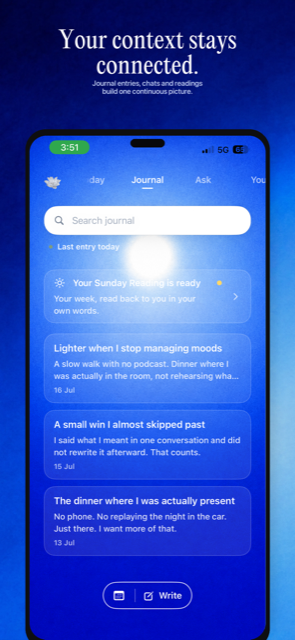
Natus gives you a reference point of your own, so feeling lost does not have to mean starting from a blank page. It is an app to understand yourself, built for recognising how you operate and what you keep returning to, so a direction can emerge from what is already true of you rather than from pressure to perform.