Why am I afraid of being alone?
The fear of being alone is often less about solitude and more about what surfaces when nothing else fills the space. A self-recognition look, not a diagnosis.
Reading time: 6 min
There is a difference between being alone because you choose it and being unable to sit with your own company. If you keep a full calendar, a constant conversation, a string of people, or a stream of noise, and the quiet moments are the ones you dread, then this page may be describing something you already feel.
If that sounds familiar, you may be wondering whether you have a fear of being alone. It is a common thing to feel, and naming it can help. The point of this page is not to diagnose you. It is to help you recognise what the fear is protecting you from, so you can meet it with more understanding instead of more self-criticism.
What may be happening
Staying busy and staying attached can be doing real work. When the noise stops, you are left with yourself, and yourself can be the loudest, least familiar room you know. The fear of being alone is often not a fear of solitude itself. It is a fear of what comes up when nothing else is there to fill the space.
So the system keeps the space filled. Plans, people, notifications, work, entertainment. Each one is a small distraction from the question that surfaces in silence: what am I without all of this? For someone who learned early that their own company felt heavy, overwhelming, or unsafe, staying surrounded can feel like the safer choice.
This is not weakness. It is a protective habit built around avoiding a feeling that once felt unmanageable. The cost is that you rarely get to hear your own thoughts, and the version of you that exists without an audience stays unfamiliar.
How it tends to show up
- You feel restless or uneasy when there is nothing scheduled and no one around.
- You fill gaps with plans, calls, or scrolling before a quiet feeling can arrive.
- You stay in relationships or arrangements partly because being alone feels worse.
- You struggle to be still with yourself without turning something on.
- You feel anxious when someone you rely on is unavailable, even for a day.
Why awareness alone may not change it
You may already know you avoid being alone. You may even have said it out loud. Knowing does not always make the quiet easier, because the avoidance is doing real work. It is keeping you from a feeling you have good reason to expect will be too much. Until that expectation changes, the filling will keep its job.
Recognition becomes useful when it moves from "I am afraid of being alone" to "I avoid my own company because I expect it to feel unbearable, and I can test that expectation." It is not about forcing long stretches of solitude. It is about noticing that the fear is partly a prediction, and predictions can be examined.
The habit of avoiding your own company is one reason you might not know who you really are, and it keeps you from understanding yourself better. When the noise has been up for a long time, it can also show up as numbness, because a part of you stopped listening a while ago. And if your ache is the other kind, feeling unseen even when people are right there, feeling so alone is the closer read.
A question worth carrying
What might you find if you stayed with yourself long enough for the noise to settle?
How Natus approaches this
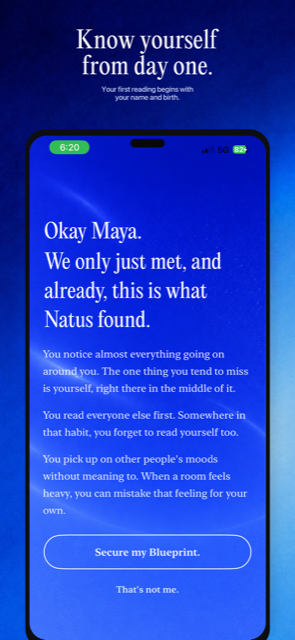
Natus starts with a personal map of how you operate, so the habit of filling every quiet moment becomes something you recognise in real time, not a flaw you hide. It reads your week back against that map, built for recognition rather than labels or a demand to be comfortable alone overnight.