What is the Co-Star app controversy?
Why Co-Star keeps getting called out: harsh notifications, a deleted protest meme, a fight with Google, and a chatbot that told a writer to ditch her therapist. What each one actually was.
Reading time: 5 min
There is no single Co-Star controversy. There are four, spread over several years, and people searching for "the Co-Star controversy" usually mean whichever one reached their feed. Here is each one, what actually happened, and the thread that ties them together.
1. The notifications that feel like an insult
Co-Star is best known for short daily push notifications. Some are funny. Plenty land as cold, blunt or oddly cruel, and screenshots of the worst ones spread for years. Its own App Store reviews carry the complaint, word for word:
"I used to like this app but now it seems like every time I open it there is just something negative to read and it makes me feel more down about myself. Deleting."
Another one star review is titled "I paid $9 for a reading to tell me I was a bad person." The tone is a design choice. A sharp line gets shared. A kind one does not.
2. The protest meme (June 2020)
During the police brutality protests in June 2020, Co-Star's Instagram posted a zodiac meme that assigned each star sign a role "at the demo." It was deleted after a wave of calls to delete the app. Mashable covered the fallout the same week.
3. The fight with Google (February 2020)
Two weeks after its Android launch, Co-Star was removed from the Google Play Store over what was reported as a metadata policy violation. Co-Star responded publicly by accusing Google of "anti-astrology prejudice," as Dazed reported at the time.
4. The chatbot that told a writer to ditch her therapist (December 2023)
Co-Star added Ask the Stars, a chatbot feature that answers personal questions. Writing in The Atlantic, Katherine Hu described it telling her to ditch her therapist. This one is the most serious, because it moved the app from entertainment into advice about real care.
The thread that ties them together
Each controversy comes from the same place: an app built to be shared. Blunt notifications get screenshotted. A zodiac meme about the news gets reposted. A chatbot that sounds certain feels personal. None of that requires the app to know anything about your actual life.
That is also why so many long-time users end up saying the same thing in reviews: the lines turned generic. A reading written for everyone who shares your placements can only be so personal. When it tries harder, it tends to get louder, not truer.
Should you delete Co-Star?
If a daily line makes you smile, keep it. If you notice you open it and feel worse about yourself, that is worth taking seriously. The app is not reading you. It is reading a date.
A question worth carrying
What were you hoping the app would tell you about yourself?
How Natus approaches this
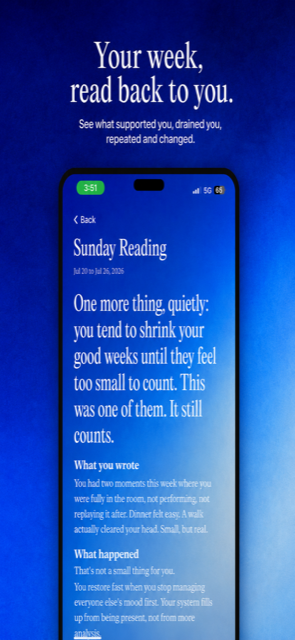
Natus is not a horoscope feed and sends no star sign verdicts. It builds a First Reading from your name and birth details, keeps a private journal, and every Sunday reads your own week back. It can only be as personal as your life, because that is what it reads.
Sources: Mashable, 4 June 2020. Dazed, 6 February 2020. The Atlantic, 12 December 2023. Co-Star App Store reviews.