Best self care apps in 2027: 8 apps compared honestly
Finch is the best self care app for most people: it is free to use and rated 4.95 from 778,291 ratings. Calm is the best for sleep and winding down, Headspace for guided meditation, Daylio for a one-tap mood check-in, Aura for a mixture of meditation and CBT-style exercises, Fabulous for routines, and Reflectly for guided reflection. Natus is the one to pick if the self care you are missing is being understood: a First Reading from your name and birth details, a private journal, and your own week read back every Sunday.
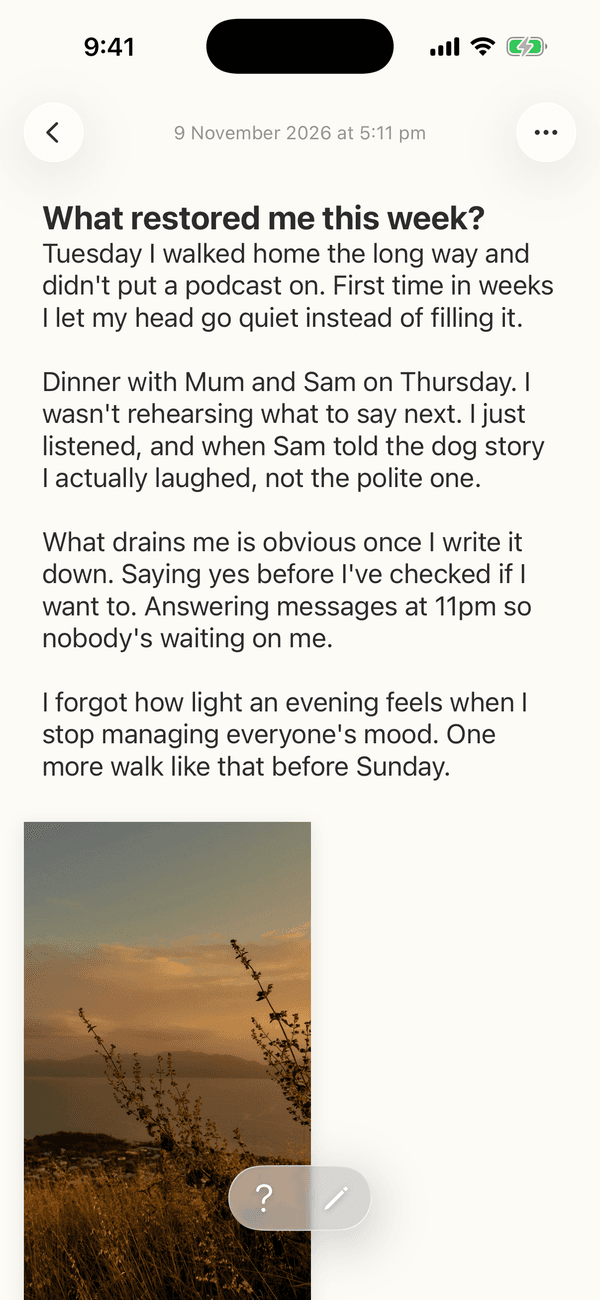
What people say in their own reviews
Verbatim from public 1 and 2 star App Store reviews of other apps in this category, not Natus.
Allows you to subscribe but not cancel1 star review on Aura
You have to email them to turn off auto renew or to cancel. There's no way to do it in the app. They auto replied with instructions for a menu that no longer exists.
Erased2 star review on Reflectly
Journaled almost daily for two years and it logged me out and wont let me sign back in so i js lost everything
Deleted 400 days2 star review on Finch
Finch corrupted my file this happens often when I get gems this is the third time. I had over 600 days of adventures but when I loaded my save file from this week it bumped me all the way down to 200 adventures.
You can't cancel1 star review on Calm
Whether I chat or go to my account, they will not cancel. I get the message that "they can't do it now, sorry" every time.
Made me more anxious2 star review on Headspace
The SonderMind therapist cancelled last minute with no explanation, but Headspace still showed that the session happened and is billing for it. Customer support is hard to work with. Overall experience created more anxiety.
The options
Finch
Best for: self care that feels like care
Rated 4.95 from 778,291 ratings, the highest rating on this page, and free to use rather than free to sample. You look after a small bird by completing small things for yourself, which turns self care into something gentle instead of a task list. The honest warning is in its own reviews: a handful of people describe lost progress and billing surprises, so export or back up what matters and check the Finch Plus offer carefully.
Calm
Best for: sleep and switching off
Rated 4.77 from about two million ratings, the most reviewed app here. Calm specialises in the end of the day: Sleep Stories, soundscapes and long meditations. It also does anxiety and stress well. Its recent 1 star reviews rarely complain about the content and almost always about cancelling or refunds, so subscribe through your Apple account where the terms are visible.
Headspace
Best for: guided meditation and courses
Rated 4.84 from 973,716 ratings. The largest guided-meditation catalogue on this page, with structured courses and a calmer, more instructional voice than Calm. Reviews say the free tier barely works, that the app has become crowded to navigate, and that some trials charged for a year. Choose it for the teaching, not for a light-touch daily habit.
Daylio
Best for: checking in without writing
Rated 4.77 from 62,592 ratings. Two taps a day gives you a mood record and, over a month, a chart of what actually moves your mood. It asks for nothing and costs nothing at the level most people need. Reviews say the paid tier is annual only, so stay on free until you are sure.
Aura
Best for: meditation plus CBT-style exercises
Rated 4.67 from 35,273 ratings. Aura mixes short meditations, sleep content and cognitive-behavioural-style exercises with licensed therapists, so it sits between the meditation apps and the self-help ones. The most repeated complaint in its recent reviews is the hardest one to live with: people say they subscribed and then could not find a way to cancel without emailing support.
Fabulous
Best for: turning self care into a routine
Rated 4.42 from 89,622 ratings, the lowest here. Fabulous is the most structured app on the page, building morning and evening routines you follow rather than content you play. Read its recent reviews first: most are 1 or 2 stars and almost all are about trial charges, bundled subscriptions and difficult cancellations.
Reflectly
Best for: guided reflection prompts
Rated 4.57 from 81,673 ratings. Reflectly asks questions and turns your answers into a reflective journal, which is a gentler entry point than a blank page. Its reviews carry two warnings worth reading: people describe paying for premium and not receiving it, and at least one long-time user lost years of entries after being signed out.
Natus(this is us)
Best for: being understood, not just tracked
No public rating yet. Natus is not a meditation or habit app, so it is last on this list by design. It builds a First Reading from your name and birth details, keeps a private journal, and every Sunday reads your own week back against how you operate, building toward a 40-part Blueprint. It fits the person who has tracked their mood for months and still cannot say why the bad days cluster when they do.
Every app compared
Checked on the US App Store, 22 November 2026. All apps are free to download.
Finch
- Rating
- 4.95
- Ratings
- 778,291
- What is free
- Genuinely free to use. Finch Plus is optional.
- Watch out for
- Reviews describe lost progress and billing surprises.
- Best for
- Self care that feels like care
Calm
- Rating
- 4.77
- Ratings
- about 2M
- What is free
- Free to download with some free sessions. The library is paid.
- Watch out for
- Reviews centre on cancelling and refunds.
- Best for
- Sleep and switching off
Headspace
- Rating
- 4.84
- Ratings
- 973,716
- What is free
- Free to download. Reviews say very little works without a subscription.
- Watch out for
- Crowded navigation; trials that charged for a year.
- Best for
- Guided meditation and courses
Daylio
- Rating
- 4.77
- Ratings
- 62,592
- What is free
- A real, usable free tier.
- Watch out for
- Reviews say the paid tier is annual only.
- Best for
- Checking in without writing
Aura
- Rating
- 4.67
- Ratings
- 35,273
- What is free
- Free to download with limited free content.
- Watch out for
- Reviews say cancelling needs an email to support.
- Best for
- Meditation plus CBT-style exercises
Fabulous
- Rating
- 4.42
- Ratings
- 89,622
- What is free
- Free to download. Heavy trial and subscription upsell.
- Watch out for
- Most recent reviews are 1 or 2 stars, mostly billing.
- Best for
- Turning self care into a routine
Reflectly
- Rating
- 4.57
- Ratings
- 81,673
- What is free
- Free to download with a limited free tier.
- Watch out for
- Reviews describe paid access not arriving and entries lost.
- Best for
- Guided reflection prompts
Natus
- Rating
- No public rating yet
- Ratings
- No ratings yet
- What is free
- The First Reading is free before the paywall. Check the app for free Ask and Sunday access.
- Watch out for
- Not a meditation, sleep or habit app.
- Best for
- Being understood, not just tracked
How this list was built
We read the 25 most recent US App Store reviews for each app on this page on 22 November 2026, along with the store's own rating and rating count for each one. The order reflects who each app genuinely serves, not who paid for a spot. Natus is ours and it is listed last on purpose, because it is not a meditation, sleep or habit app.
The short version
Want a small daily act of care: Finch. Want to sleep: Calm. Want meditation: Headspace. Want a two-tap mood log: Daylio. Want exercises with your meditations: Aura. Want a routine: Fabulous. Want guided questions: Reflectly. Want to understand the bad weeks rather than just survive them: Natus.
Best self care app overall
Finch. It is the rare self care app where the free version is the product, not a demo, and it has the highest rating on this page at 4.95 from 778,291 ratings. The design is the trick: caring for a small bird makes the daily check-in feel like looking after something, and people keep doing it. The honest caveats come from the same reviews: some people report losing progress after a sync problem, and some report being charged more than they expected when Finch Plus was offered. Both are easy to guard against. Back up your data, and read before you tap.
Best self care app for a bad night
Calm, and Headspace as the quieter alternative. Calm is built for the end of the day, with Sleep Stories and soundscapes that ask nothing of you, and it has the most ratings of any app here at about two million. Headspace is more instructional, with structured courses and a calmer teaching voice. Both draw the same complaint in their recent reviews: not the content, but the difficulty of cancelling or getting a refund. If you subscribe to either, use your Apple subscription settings from the first day.
Best self care app for the pattern behind the mood
This is where the category mostly stops short. A mood tracker shows you that Tuesdays are bad. It does not tell you why. Natus is built for that second question: you write what actually happened, and every Sunday it reads the week back in your own words, showing what repeated, what drained you and what supported you. It starts with a First Reading built from your name and birth details, so there is context even before you write anything. Free to start.
The paywall problem in self care
Read the last 25 reviews of almost any app here and billing is the story. A trial that becomes an annual charge. A subscription that lives on the app's website and not in your Apple account, which is exactly why people cannot find the cancel button. A paid tier that arrives without its features. None of that is a reason to avoid self care apps. It is a reason to subscribe through Apple, to read the trial terms, and to keep your own copy of anything you would be sad to lose.
Where Natus fits, and where it does not
Natus will not play you a sleep story, guide your breathing, or give you a streak to protect. If that is the self care you need, Finch, Calm or Daylio will serve you better and cost less. Where Natus fits is the gap at the end of a long stretch of tracking: you have the data and the streak, and you still do not understand yourself. It takes a different input, your own week, and shows it back.
The honest short version
A gentle daily habit: Finch. Sleep: Calm. Meditation: Headspace. A quick mood log: Daylio. Exercises with your meditations: Aura. A routine: Fabulous. Guided questions: Reflectly. Understanding the pattern: Natus.
Common questions
- What is the best self care app?
- Finch is the best all-round pick because it is free, it is the highest rated here at 4.95, and it is designed to be used daily. Choose Calm for sleep, Headspace for meditation, Daylio for mood tracking, and Natus if what you want back is understanding rather than another tracker.
- Are self care apps actually helpful?
- They help when they do one clear job you keep coming back to: sleep, breathing, a mood record, or a few minutes of reflection. They struggle when they become a second to-do list. The reviews of this category show the same pattern: people stay when the app gives something back, and leave when it mostly asks for money.
- What is the best free self care app?
- Finch has the most usable free version here, and Daylio's free tier is real. Calm and Headspace both keep most content behind a subscription. Natus is free to start: First Reading and up to three onboarding questions.
- Which self care app is best for anxiety?
- Calm and Headspace are the strongest for acute anxiety in the moment, because breathing and guided sessions work in real time. Daylio is the best for seeing whether your anxiety follows a pattern. For the pattern underneath the anxiety, Natus reads your own week back.
- Why do self care apps charge so much?
- The category runs on free trials that convert to annual subscriptions, and that model shows up in the reviews. Across the other apps on this page, billing and cancellation are the single most common recent complaint. If you subscribe, do it through your Apple account so you can see it and cancel it in one place.
- What is the best self care app for understanding your own mood?
- Daylio gives you the fastest record of your mood. Natus goes a step further: you journal what happened, and every Sunday it reads the week back against how you operate, so you can see what actually drives the mood rather than just logging it.
- Do self care apps replace therapy?
- No. They can support sleep, stress and reflection, but they are not treatment. Natus is a journal and a reading of your own week, not a therapy service. If you are struggling, a professional is the right place to start.