Best astrology apps in 2027: 9 compared for birth charts, horoscopes and compatibility
Updated 22 November 2026
It depends whether you want a forecast or a read on yourself. If you want an app like Co-Star that is more personal and less horoscope, Natus is the one built for that: it reads your birth details and your own week into plain English and does no daily forecast at all. If you still want a daily read, Co-Star is the best free one and friend compatibility comes with it at no cost. TimePassages is the best app for birth charts and transits. The Pattern is the best for beginners, CHANI for warm daily guidance, Astrology Zone for monthly horoscopes, Sanctuary for paid reader sessions, Nebula for psychic-style readings, and Astro Gold for people who already read charts.
What people say in their own reviews
Verbatim from public 1 and 2 star App Store reviews of other apps in this category, not Natus.
Birth chart not free anymore?1 star review on TimePassages
Tried to use the app today and was required to pay $0.99 to access my birth chart which was always free on the app before now.
used to be the best app ever2 star review on Nebula
ive had nebula for years, it used to be so personalized and so amazing and accurate and now everything is kind of generic and things you used to be able to see for free are stuck behind the premium pay wall.
Used to be fantastic, now worthless1 star review on Co-Star
Now, it provides no more information than a generic quip from a fortune cookie. It's comically bad, clearly just spitting out generic nonsense.
Everything is locked behind a paywall1 star review on CHANI
I'm not even able to sample the product to see if a subscription would be worth it for me.
The options
CHANI
Best for: warmth and daily calm
Rated 4.92 from 60,741 ratings, the highest of the apps here. A gentle daily astrology app built around kind writing, meditations and sleep content. It costs $11.99 a month or $107.99 a year. The common thread in its reviews: people love the voice, but you can sample very little before paying.
TimePassages
Best for: real chart mechanics
Rated 4.84 from 44,202 ratings. The closest thing to an astrologer's toolkit on a phone: full birth charts, houses, transits and chart comparisons. Single charts cost $0.99 each, for a birth, comparison, transit or progressed chart. Pro is $7.99 a month or $59.99 a year. Recent reviews complain that charts which used to be free now cost money, so treat the free tier as limited.
Co-Star
Best for: a ten-second daily line
Rated 4.78 from 205,827 ratings, more than any other app here. A beautifully designed daily note built from your chart, plus friend compatibility, both free. Apple featured it in an App Store story called 5 App Aesthetics We're Loving, which is why it is the design pick. Pro-Star is $8.99 a month, Eros for couples is $6.99, question packs start at $2.99, Your Year Ahead is $11.99 and the advanced relationship chart is $8.99. Long-time users say the lines turned generic and oddly dark, so treat it as a prompt rather than truth.
The Pattern
Best for: personality depth without learning astrology
Rated 4.05 from 16,020 ratings. Less a horoscope app, more long plain-English breakdowns of who you are, written with no chart jargon at all. Go Deeper+ is $14.99 a month, $29.99 a quarter or $83.99 a year. Connect+, its dating side, is $24.99 a quarter, and extra profile slots start at $9.99. Its 1 star reviews are mostly about the paywall, not the readings.
Astrology Zone
Best for: traditional monthly horoscopes
Rated 4.70 from 35,409 ratings. Susan Miller's long monthly essays, the classic newspaper-style forecast at full length. It costs $6.99 a month, $17.99 for 3 months or $59.99 a year. The most repeated complaint in its reviews is ads that are hard to close, including for paying subscribers.
Sanctuary
Best for: paid reader sessions
Rated 4.80 from 44,134 ratings. A psychic reading app built around paid reader sessions. An intro reading is $4.99, and a 10 minute reading costs $29.99 to $49.99. Sanctuary+ is $14.99 a month or $49.99 a year. Its reviews complain about paying for a reader who does not show up, and about free features moving behind a paywall.
Nebula
Best for: psychic-style readings and charts
Rated 4.57 from 170,867 ratings. A mix of birth charts and paid readings, with premium plans from $2.99 to $49.99 and a chat balance at $9.99. Its reviews focus on trials that convert to full-year charges, charges after cancellation, and features that used to be free moving behind payment.
Astro Gold
Best for: reading charts yourself
Rated 3.69 from 236 ratings, the lowest rating here. A chart tool for people who already read charts. Gold is $7.99 a month, reports are $3.99 each and astrolocality maps are $24.99.
Natus(this is us)
Best for: a personal reading from your birthday, in plain English
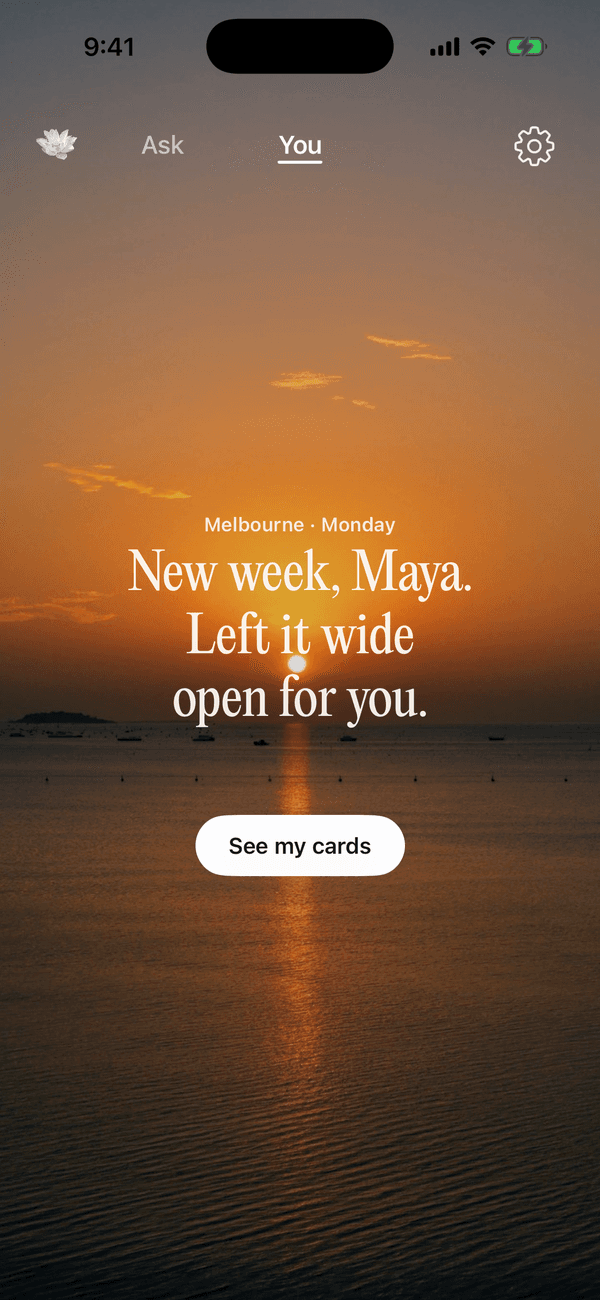
Not a chart tool or a horoscope feed. Natus builds a First Reading from your name and birth details, keeps a private journal, and every Sunday reads your actual week back. It suits someone who opens astrology apps hoping to feel seen. It has no daily horoscope, no transits and no moon-phase alerts. Free to start: First Reading and up to three onboarding questions. Paid is US$12.99 a month or US$69.99 a year with the Blueprint included.
Every app compared
Checked on the US App Store, 22 November 2026. All apps are free to download.
CHANI
- Rating
- 4.92
- Ratings
- 60,741
- What is free
- Free to download. Reviews say you can sample very little before paying.
- Cheapest paid
- $11.99 a month
- Best for
- Warmth and daily calm
TimePassages
- Rating
- 4.84
- Ratings
- 44,202
- What is free
- Free to download. Reviews say charts that used to be free now cost $0.99.
- Cheapest paid
- $0.99 for one chart
- Best for
- Real chart mechanics
Co-Star
- Rating
- 4.78
- Ratings
- 205,827
- What is free
- Free to download. The daily note and friend compatibility cost nothing.
- Cheapest paid
- Pro-Star $8.99 a month
- Best for
- A ten-second daily line
The Pattern
- Rating
- 4.05
- Ratings
- 16,020
- What is free
- Free to download. Its 1 star reviews are about the paywall, not the readings.
- Cheapest paid
- $14.99 a month
- Best for
- Personality depth without learning astrology
Astrology Zone
- Rating
- 4.70
- Ratings
- 35,409
- What is free
- Free to download. Reviews complain about ads that are hard to close.
- Cheapest paid
- $6.99 a month
- Best for
- Traditional monthly horoscopes
Sanctuary
- Rating
- 4.80
- Ratings
- 44,134
- What is free
- Free to download. Reviews say free features moved behind a paywall.
- Cheapest paid
- Intro reading $4.99
- Best for
- Paid reader sessions
Nebula
- Rating
- 4.57
- Ratings
- 170,867
- What is free
- Free to download. Reviews say features that used to be free moved behind payment.
- Cheapest paid
- From $2.99
- Best for
- Psychic-style readings and charts
Astro Gold
- Rating
- 3.69
- Ratings
- 236
- What is free
- Free to download.
- Cheapest paid
- $3.99 for one report
- Best for
- Reading charts yourself
Natus
- Rating
- No ratings yet
- Ratings
- 0
- What is free
- The First Reading is free before the paywall. Check the app for free Ask and Sunday access.
- Cheapest paid
- $12.99 a month
- Best for
- Being read, not forecast
How this list was built
We read 5,087 one and two star App Store reviews across 34 journal and self-discovery apps, including 2,000-plus across the astrology apps here. Every rating and price was checked on the US App Store on 22 November 2026. The order reflects who each app genuinely serves, not who paid for a spot, and Natus is listed last because it does a different job.
What to look for in an astrology app
An astrology app and a horoscope app usually do different jobs, so decide which one you actually want before you pick. A horoscope app writes a short forecast for your star sign and asks for almost nothing to get started. An astrology app builds a reading from your full birth details, so look at how personal that writing feels and how much of it is about you rather than about your sign.
Start by deciding which of three jobs you want, because they rarely live in one app: a fast daily horoscope, a real birth chart, or writing that describes you as a person.
Then check three things before you pay. What you get for free, because the reviews here are full of people who paid before they could sample anything, so look for a free tier that shows a real reading and not a locked teaser. How personal the writing feels, because the most common complaint across every app here is that readings feel generic. And how your birth details are stored, since most apps build your chart from your date, time and place of birth.
Which of these astrology apps should you actually get?
If you want a daily horoscope that takes ten seconds: Co-Star. If you want warmth and calm more than charts: CHANI. If you want your real birth chart, houses and transits: TimePassages. If you want to feel deeply described without learning any astrology: The Pattern. If you want the classic monthly forecast: Astrology Zone. If you want to talk to a reader: Sanctuary. If the reason you keep opening astrology apps is that you want to understand yourself: Natus.
If Co-Star is the one you are leaving, our Co-Star alternatives page compares the apps that are more personal and less horoscope, with the main complaints people leave Co-Star over.
Best free astrology app
Co-Star is the best free astrology app for daily use. Its daily note and friend compatibility cost nothing. TimePassages and CHANI both have free tiers, but reviews say their best parts have moved behind payment. Natus is free to start: your First Reading and up to three onboarding questions cost nothing.
Best astrology app for transits and daily notifications
Transits are where the sky today touches your birth chart. They are what a daily astrology notification is built from.
TimePassages is the pick for real transit work. It draws the actual transit chart and shows which planet touches which point in your chart. A transit chart costs $0.99, or Pro is $7.99 a month or $59.99 a year.
Co-Star is the pick for a short daily push. It writes one line from the day's sky against your chart and sends it. The daily note is free.
CHANI is the warmer option: a short piece of writing each day, $11.99 a month.
To say it plainly: Natus does no transits. No daily horoscope, no transit chart, no moon-phase alerts.
Best astrology app for compatibility
Co-Star is the best astrology app for compatibility, mostly because it is free. Friend compatibility lets you add people and see how your charts sit together at no cost. For couples it sells Eros at $6.99.
The Pattern is the deeper read. It writes long relationship breakdowns, and Reddit users rate them above Co-Star's. Some also say those reads left them more anxious about the relationship, not less.
TimePassages does the technical version: a real comparison chart, two charts side by side, for $0.99.
Best astrology app for beginners
The Pattern is the best astrology app for a beginner. It uses no jargon at all, so you never need to know what a house or an aspect is. You read about yourself, not the sky.
Co-Star is next easiest: one short daily line, free.
Astro Gold and TimePassages reward learning first. A Reddit user described a professional chart app as feeling like a cockpit to a beginner, and that is fair. If you do want to learn the mechanics, learn on TimePassages, which shows houses, transits and chart comparisons.
Do not pay on day one. Use the free tiers until you know what you want.
Best designed astrology app
Co-Star has the best design of the apps here. Apple put it in an App Store story called 5 App Aesthetics We're Loving, and even people who dislike its readings tend to praise how it looks.
TimePassages and Astro Gold are tools first, and their screens show it. Reddit users who love TimePassages for detail still call its look dated.
A free birth chart without an app
You do not need an app for a full birth chart. Two websites do it free in a browser.
astro.com, run by Astrodienst, gives a complete chart with houses and aspects, and has been the reference tool for decades.
astro-seek.com gives a full chart, transit tables and many of the extras apps charge for.
Both are free, both are good, and neither asks for a subscription to show you your own chart. The trade-off: they are built for studying a chart, not for a sentence about your day.
Natus also has a free birth chart calculator.
If you only want one placement, try the free moon sign calculator, rising sign calculator or Mars sign calculator. Each one answers that single question first.
One thing none of the sites above does is explain a single placement in plain words. The moon sign guides on this site do: what a Leo moon means takes two minutes and tells you what that placement needs.
Best birth chart app
TimePassages is the best birth chart app on this list for full chart detail. It gives you full birth charts, houses, transits and chart comparisons, making it the closest thing to an astrologer's toolkit on a phone. It suits people who want to study the mechanics of astrology rather than read a short forecast. The trade-off is important: a birth chart now costs $0.99 instead of nothing, and its reviews are angry about the change.
Best horoscope app
Co-Star is the best horoscope app for a fast daily reading. Its daily note takes about ten seconds and adds friend compatibility, so it fits people who want a small hit of astrology each day. The trade-off is that long-time users say the lines have become generic and oddly dark, so use it as a prompt rather than truth. Choose CHANI instead if you want warmth and calm: kind writing, meditations and sleep content.
What Reddit recommends
In a busy thread on r/Zodiac asking for the best astrology apps, the names that came up most were The Pattern, Co-Star, CHANI and Nebula. Users who read charts themselves named TimePassages and Astro Gold for chart detail.
The complaints repeated most: subscription traps, surprise charges, billing per minute or per question, and readings that left people more anxious than when they opened the app.
Commenters also named apps that are not on this list, including Time Nomad, Astro Future and Astromatrix. We kept to nine because we only list apps whose prices and reviews we checked ourselves. The quotes near the top of this page are real reviews, word for word.
Apps that charge per reading
Two apps here bill you per session rather than per month.
Sanctuary charges for reader sessions. An intro reading is $4.99, and a 10 minute reading costs $29.99 to $49.99, so one 10 minute session can cost more than two months of CHANI. Sanctuary+ is a separate plan at $14.99 a month or $49.99 a year.
Nebula sells a chat balance for $9.99.
This model can be fair, because you pay for what you use. It also adds up fast, so check the per-minute price before you start.
The one complaint that runs through all of them
Astrology apps share a structural problem: the reading is written once for everyone who shares your placements. That is why reviews across every app, from Co-Star to CHANI to Nebula, eventually arrive at the same word: generic. The apps above differ in tone and price. Only Natus sidesteps the structure, because it reads your actual week.
Where Natus fits, and where it does not
Natus is not the best astrology app for forecasts, and it does not try to be. There are no daily horoscopes, no transits and no moon-phase alerts in it; if that is what you want, TimePassages or CHANI will serve you better. What Natus is built around is the hope underneath most astrology downloads: feeling understood. It gives you a First Reading from your name and birth details, a private journal, and a reading of your own week every Sunday. Free to start, then US$12.99 a month or US$69.99 a year with the Blueprint included.
The honest short version
Want craft: TimePassages. Want warmth: CHANI. Want speed: Co-Star. Want depth without homework: The Pattern. Want the classic monthly forecast: Astrology Zone. Want a reader: Sanctuary. Want free charts in a browser: astro.com. Want to be read rather than forecast at: Natus.
Common questions
- What is the best astrology app?
- TimePassages is the best astrology app for real chart work, and Co-Star is the best free one. The Pattern is the best astrology app for beginners. If you keep opening astrology apps because you want to feel understood, Natus reads your own week back every Sunday.
- What are the best astrology apps?
- The best astrology apps here do different jobs: TimePassages for birth charts and transits, Co-Star for a fast daily line and free friend compatibility, CHANI for warm daily guidance, The Pattern for deep plain-English writing, and Astrology Zone for the monthly horoscope. Natus is the one to pick if what you want is to be understood rather than forecast.
- Which astrology app is best for daily transit notifications?
- TimePassages is best for real transit charts. It draws the current sky against your birth chart, at $0.99 a chart or $7.99 a month for Pro. Co-Star is the best free option for a short daily push note. Natus does not do transits at all.
- Which astrology app is best for compatibility?
- Co-Star is the best free one. Friend compatibility costs nothing, and Eros for couples is $6.99. The Pattern writes the deepest relationship reads, though some users say they left them more anxious. TimePassages draws a real comparison chart for $0.99.
- What is the best astrology app for beginners?
- The Pattern, because it uses no chart jargon at all. Co-Star is nearly as easy: one short line a day. Astro Gold and TimePassages reward learning first, and beginners often find a professional chart app feels like a cockpit.
- Which astrology app has the best design?
- Co-Star. Apple featured it in an App Store story called 5 App Aesthetics We're Loving. TimePassages and Astro Gold are built as tools first, and their screens look it.
- Is there an app like Co-Star?
- Yes. CHANI is like Co-Star with warmer daily writing, The Pattern is like it with deeper personality reads, and TimePassages is like it for real chart work. If the part of Co-Star you liked was feeling seen rather than forecast, Natus is built around that.
- What is the best birth chart app?
- TimePassages is the best birth chart app here. It gives you full birth charts, houses, transits and chart comparisons, so it is the closest thing to an astrologer's toolkit on a phone. Recent reviews say charts that used to be free now cost money, so treat its free tier as limited.
- What is the best natal chart app?
- TimePassages is the best natal chart app on this list, and it is the same app as the best birth chart app, because natal chart and birth chart mean the same thing. One chart costs $0.99, and Pro is $7.99 a month or $59.99 a year.
- Which astrology app has the best ratings?
- CHANI has the highest rating of the apps here, 4.92 from 60,741 ratings. Co-Star has the most ratings, 205,827, at 4.78. Astro Gold is the lowest at 3.69 from 236 ratings.
- Is there a free birth chart app?
- Every app here is free to download, but full chart detail often costs money: TimePassages charges $0.99 per chart, and reviews of CHANI and Nebula say more of their best parts sit behind payment. Co-Star is the best free astrology app here for daily use, and Natus is free to start.
- What is the best horoscope app?
- Co-Star is the best horoscope app here for a fast daily reading: its daily note takes ten seconds and includes friend compatibility. Choose CHANI instead if you want warm daily guidance, meditations and sleep content.
- What is the most accurate astrology app?
- TimePassages is the most respected for technical chart work. The Pattern and CHANI get the warmest reviews for written horoscopes people describe as personal. For accuracy about your actual life, Natus reads your own week back every Sunday.
- What is the best free astrology app?
- Co-Star has the most usable free daily content. Natus is free to start: First Reading and up to three onboarding questions. TimePassages and CHANI have both moved their best parts behind payment.
- Do I need to know anything about astrology to use these apps?
- No. Every app on this list works if all you know is your star sign. TimePassages rewards some learning, but The Pattern, Co-Star, CHANI and Natus ask for nothing but your birth details.
- Why do so many astrology app reviews mention paywalls?
- Because it is the category's main story right now. Charts, horoscopes and readings that were free for years have moved behind subscriptions across nearly every major app, and long-time users are angry about it.