Should a teenager take a personality test?
A teen personality test can give useful words and start a good conversation. It cannot say who a teenager will become. What to look for, what to ignore, and privacy.
Reading time: 6 min
A personality test can give a teenager useful words and a good conversation. It cannot tell them who they will be. At fifteen or sixteen the answers are still moving, and the person answering is still being built, so a result is a photo of one afternoon rather than a description of a person.
That does not make teen tests pointless. It just tells you what to expect from one, and where the real value sits.
What may be happening
Usually the teenager found the test themselves, on a school laptop or through a friend, and now a four letter result is sitting in their phone. Sometimes a parent suggested it, hoping the test would open a conversation about study or a first job. Sometimes it is a printable quiz going around a year group, which is more social than psychological.
The pull is real and simple. Being given a category feels like being known, and at an age when most things about yourself are still being decided by other people, that is a genuinely nice feeling.
The trouble is the flip side. A label handed to a teenager can turn into a rule very quickly. I am not a maths person. I am the quiet one. I cannot do groups. Those sentences are cheap to say at fifteen and expensive to unlearn at twenty five, mostly because nobody ever checks them.
How it tends to show up
- The result becomes part of how the teenager introduces themselves within a week.
- They take a second test, get a different answer, and quietly decide tests are stupid.
- A parent reads the result as a diagnosis rather than a description.
- A printable quiz gets shared in a group chat and becomes a small social ranking.
- The test asks for a school name or an email before showing anything.
- A shy teenager answers as the version of themselves they show at home, not the one they are at school.
- Someone decides against a subject because a quiz implied they would not like it.
- Nothing is written down, so a month later nobody remembers what the result actually said.
Why awareness alone may not change it
The most honest thing to say about teen personality testing is that the ground is moving. Personality keeps developing through the teenage years and into the twenties. Any test taken in the middle of that is measuring a moment in a process.
The format matters here. Tests that sort you into a type are the least stable, because one changed answer moves you into another box entirely. Tests that place you on a range age better, because growing up nudges the number instead of rewriting the whole result. If a family is going to use one, a free questionnaire built on public research questions, with scores shown on a range, is the safer choice. Free interest profilers are better again when the real question is what to study, because they ask what someone enjoys doing rather than who they are.
Then there is the part that most teen test pages skip entirely, which is privacy. Many free quiz sites make money from the answers, and a teenager is an attractive user because they are forming habits. A simple rule covers most of it: if a test asks for a full name, a school, a phone number or a social login before it shows a result, close the tab. Results should come first.
And a parent reading the answers changes the test. A teenager who knows someone will read every response answers for the reader. If the goal is a real conversation, ask what they got and let them decide what to share. That produces better information than a hidden screen ever will.
One more thing worth saying plainly. These tests are not a way to check whether a teenager is okay. They cannot see anxiety, low mood or anything else that needs care. If the worry is how they are doing rather than who they are, a GP or a school counsellor is the right door, and no quiz replaces that.
A question worth carrying
Which part of that result would I be annoyed to still be true in five years?
That question does two useful things. It shows which parts of the label are real enough to keep, and it turns the rest back into something a person can change. Most teenagers answer it fast, and the answer is rarely the part the test made a fuss about.
How Natus approaches this
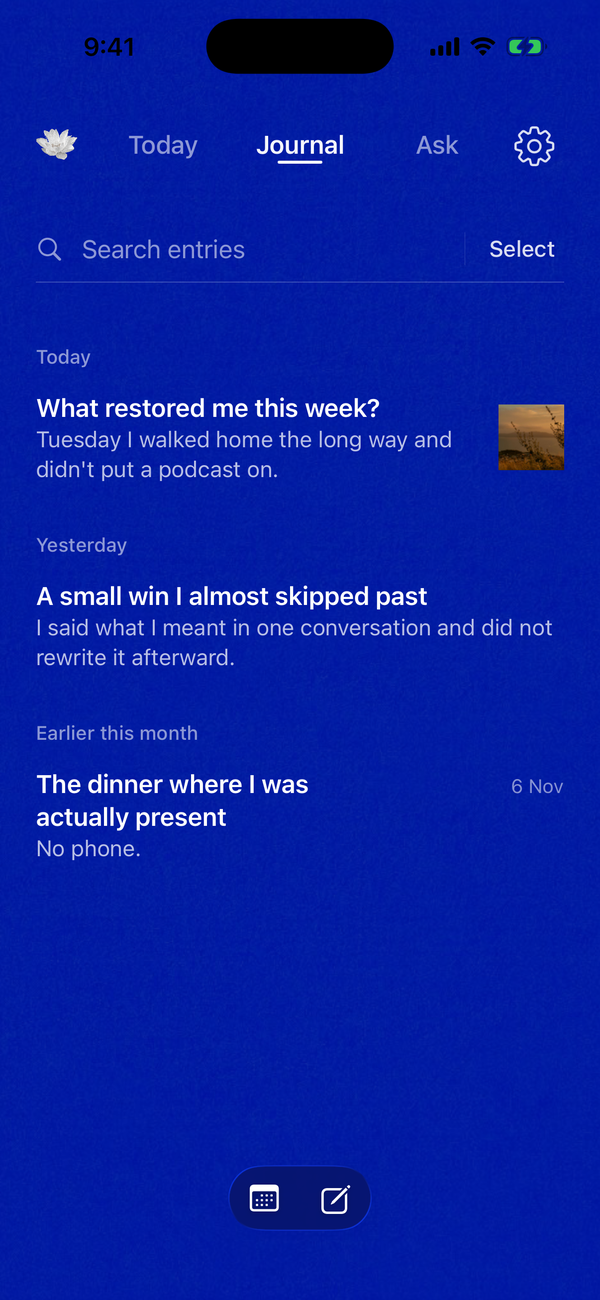
Natus does not give a teenager a type. It starts with a personal map built from your name and birth details, then you write in it, and it reads your weeks back to you in your own words.
For a younger person the value is different from a test result. Nothing is locked in at the start, because the map grows as you do. A year of ordinary entries shows what actually kept coming up, which is a fairer picture of a person at sixteen than four letters decided on a Tuesday.
If you want the wider version of this, read what a free personality test can and cannot tell you. If the question behind the test is really about work, career quiz is the closer read. And if a teenager is trying to work out what they are actually good at, how to find what you are good at is written for exactly that.
See what you're naturally good at. Get your First Reading.
Common questions
- Are personality tests accurate for teenagers?
- Partly, and less than they are for adults. Teenagers are still changing quickly, so a result captures one moment rather than a settled pattern. Trait based tests that show a score on a range hold up better than tests that put a teen into a single type.
- Which personality test is best for a teenager?
- A free Big Five questionnaire built on public research questions is the safest general choice, because it shows scores on ranges rather than one label. If the question is about study or work, a free interest profiler is more useful than a personality test, because it is built around what someone likes doing.
- Should a parent read their teenager's answers?
- Ask first. A teenager who knows a parent will read every answer is taking a different test and will answer for the audience. It is fair to want to know they are safe. It is not the same as reading their private answers, and they will know the difference.
- Can a personality test tell a teenager what to study?
- No. It can suggest what kind of work might suit their preferences, which is one input. It cannot see their marks, their circumstances, their health or how they handle a hard week. Treat it as a conversation starter about options, not as advice.
- Is a personality test a way to check on a teenager's mental health?
- No. Free quizzes are built for curious, healthy people and cannot spot depression or anxiety. If the worry is how a teenager is doing rather than who they are, a GP or a school counsellor is the right door.