Attachment style test: which pattern do you run?
What an attachment style test actually measures, what the four patterns look like in real life, and a quick way to see which one you run.
Reading time: 6 min
An attachment style test is a short set of questions that sorts the way you handle closeness into one of four patterns: secure, anxious, avoidant, or fearful-avoidant (sometimes called disorganized). It is not a diagnosis. It is a name for the thing you tend to do when someone gets close, pulls away, or lets you down.
Most people do not need a hundred questions to see their pattern. It is usually already visible in how you wait for a reply, how you fight, and what you do in the first quiet moment after someone disappoints you.
If you want a fast read: we built a four-question quiz that gives you one honest line about how you operate, in about a minute. Take the quiz.
What may be happening
You are probably not searching for a test out of curiosity. Something happened: a relationship that keeps hitting the same wall, a habit of pulling away or holding on too tight, a fight that felt bigger than the thing it was about. The test is a way of asking a harder question in a safer form: is there something about me that keeps doing this?
There is. Everyone runs a pattern for closeness, and it was learned early, from whoever raised you and whatever closeness cost back then. A test does not create the pattern. It names which one is yours, so you can watch for it instead of being surprised by it.
How it tends to show up
The four patterns, in plain words:
- Secure. Closeness feels basically safe. You can say what you need and hear what they need without it turning into a threat. If this is you, you are probably not reading this page.
- Anxious. You watch for signs the other person is leaving, and the watching never fully stops. Reassurance helps for an hour, then the doubt comes back. More on anxious attachment.
- Avoidant. Closeness itself starts to feel like pressure, so you pull back to feel like yourself again. More on dismissive avoidant attachment.
- Fearful-avoidant. You want the closeness and fear it at the same time, so you reach and retreat in turns. More on fearful avoidant attachment and the disorganized pattern.
Whichever one is yours, it does not stay in romance. The same pattern shows up with friends, family, and anyone whose opinion of you matters. Different rooms, same reflex. More on how attachment patterns repeat across relationships.
Why awareness alone may not change it
A test can name your pattern in an afternoon. It cannot change it, because the pattern is not a belief you hold. It is a reflex that fires before you think: the impulse to check the phone again, to go quiet, to leave first. Knowing the name helps you catch it earlier. It does not switch it off.
What actually shifts a pattern is slower and less dramatic: noticing it in small moments, over and over, until the reflex becomes something you can see coming instead of something you only see afterwards.
A question worth carrying
When someone gets close, what do I do first: reach, wait, or leave?
How Natus approaches this
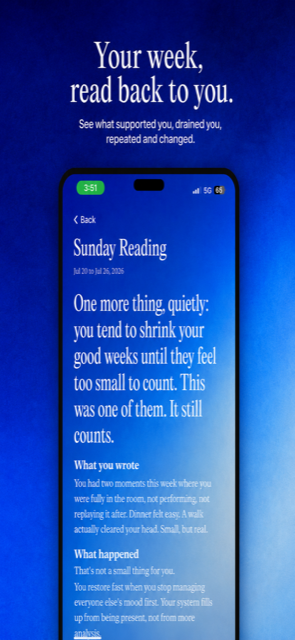
Natus is built around a simple idea: you already run a pattern, and seeing it clearly beats being told to fix it. Your First Reading is a personal map of how you operate, and each week your journal is read back against it, so the reflexes you cannot see in the moment start to show up on the page. If you want the short version first, the four-question quiz gives you one honest line back. Or start with the best app to understand yourself page.